AI is changing work across industries, and its impact is more complicated than the headlines suggest. For workers and job seekers, the conversation can feel like a mix of opportunity and uncertainty as new tools reshape how work gets done.
Some predictions about AI have proven true, while others have missed the mark. The reality is a shifting workplace where AI is automating some tasks, redesigning some roles, and creating new opportunities.
To understand what AI means for work right now, look at displacement, reshaping, and new job trends, and practical steps to stay prepared for what comes next.
Job Displacement: The Impact Is Real, but It’s Complicated
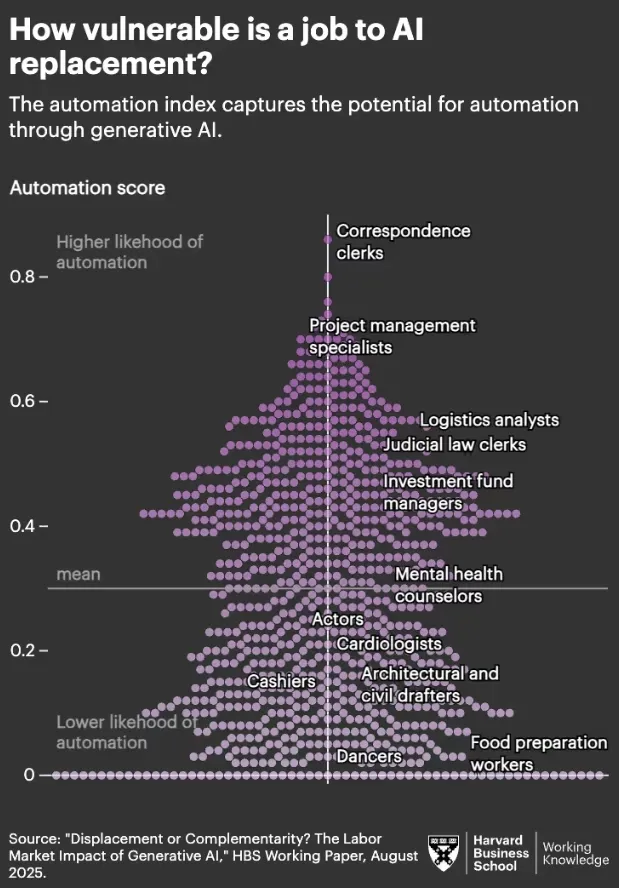
Job displacement happens when AI is used to reduce or remove tasks or roles. Though alarming, it isn’t happening at the pace initially predicted. Entire job categories aren’t being wiped out by AI, but tasks are changing as AI tools help some workers save time. AI isn’t replacing every worker, but it is changing the work of many jobs.
AI is affecting work, but rather than witnessing widespread job losses, the evidence shows gradual labor market changes, according to research from Stanford. Some jobs are at more risk to be impacted by AI, particularly entry-level jobs, as companies plan to use AI to replace these roles. Understanding exposure to AI versus job elimination due to AI is important in assessing the level of impact on your job. Exposure means a job includes tasks that AI tools can automate, but it doesn’t make the entire role obsolete. Job elimination is when a role becomes completely automated without a human worker involved.
Courtesy of Harvard Business Review
Evaluating your tasks can help you identify repetitive work that could be shifted to AI. This opens the door to focusing more on human tasks, like problem-solving and other skills that are less effective when left up to AI.
Job Reshaping: Same Title, Redesigned Work
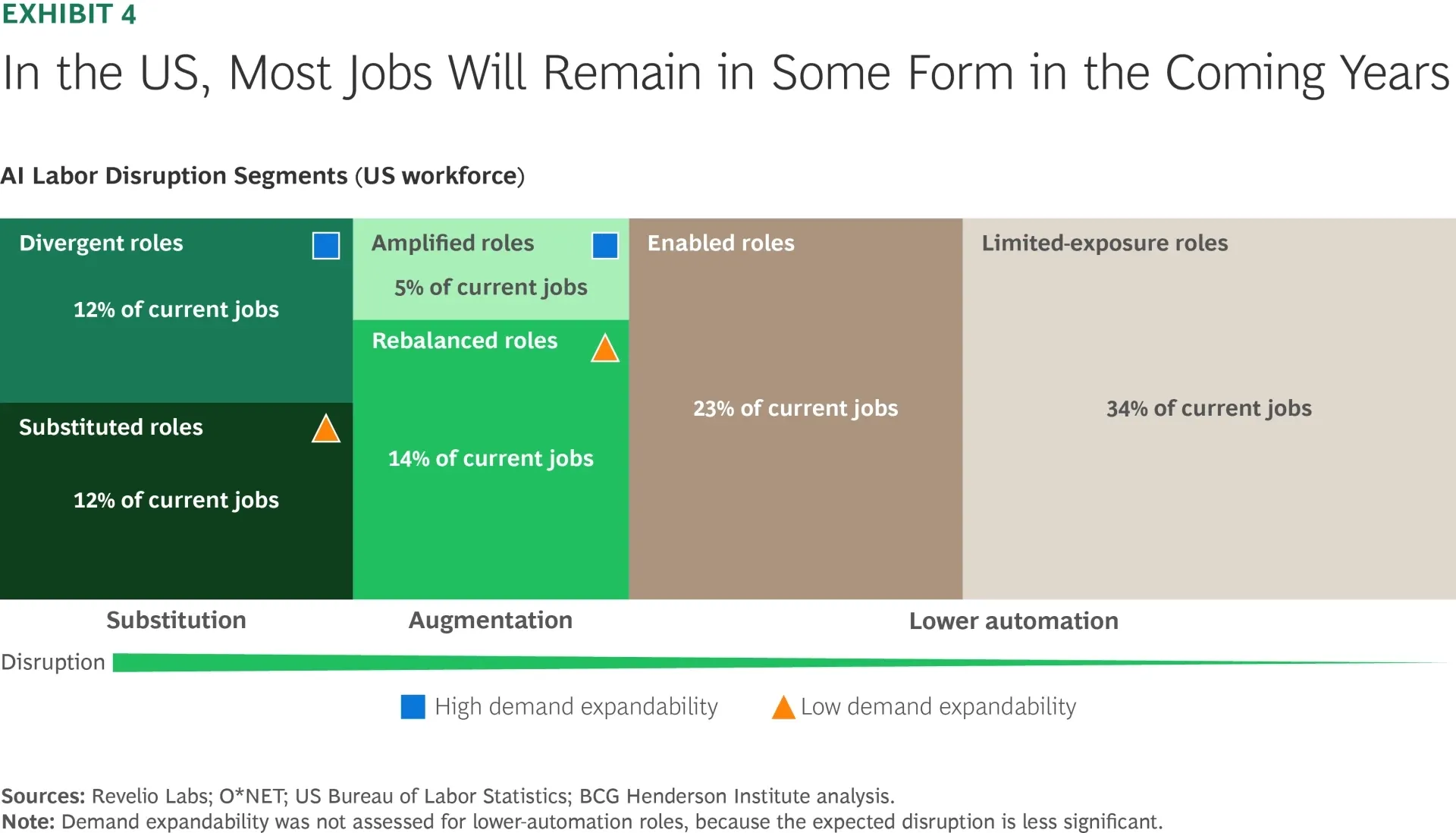
For many workers, AI is changing their job faster than it’s taking it. According to Boston Consulting Group, AI will reshape 50–55% of U.S. jobs within the next three years. In Canada, around 60% of jobs have exposure to AI, according to Statistics Canada.
Courtesy of BCG
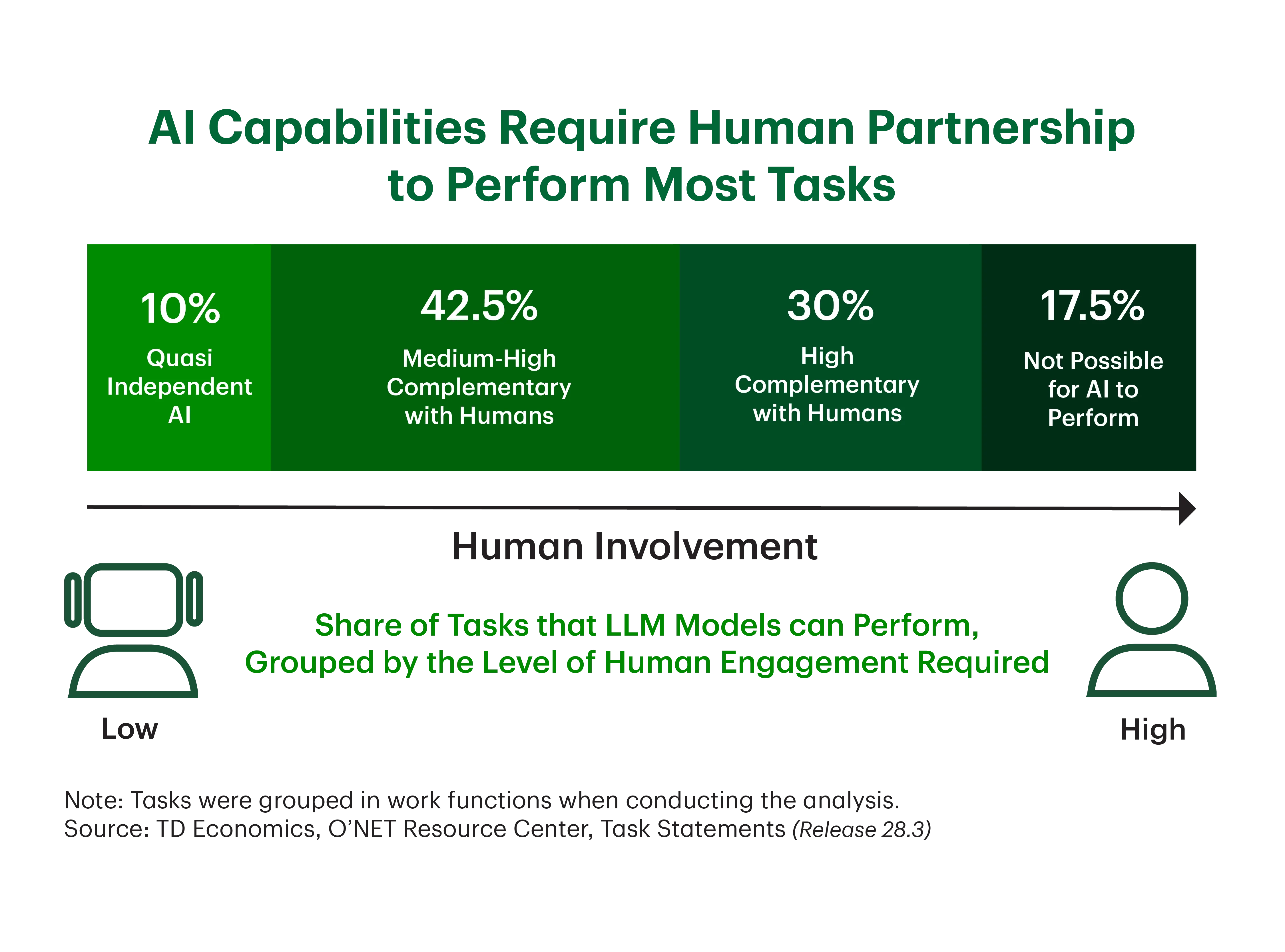
As AI reshapes jobs, day-to-day responsibilities may change. From writing emails and creating first drafts of memos to using AI to automate repetitive steps and improve customer support, these tools can help workers complete routine tasks faster. The human worker remains at the center of it all, judging when to use AI, verifying information, and using discretion in how AI’s output is applied. When AI handles more basic tasks, it allows workers more time to focus on strategic or creative work.
Courtesy of TD Economics
The PwC AI Global Jobs Barometer shows headcount and wages are growing faster at the most AI-exposed companies. The research also shows AI is creating a two-track labor market of professionalized jobs and democratized jobs.
- Professionalized jobs: Reshaping roles to require more human expertise
- Democratized jobs: Roles that are easier for non-experts to access and perform
While this shift can feel uncertain, it also creates new opportunities for workers. Workers who understand where AI fits and where human skills matter most will be better prepared for what comes next.
Job Creation: AI Isn’t Just Reshaping Work; It’s Creating Jobs
Much of the discourse around AI and work is negative. But there are real advantages to technology, like the jobs it creates. According to LinkedIn, AI has created 1.3 million jobs, like:
- AI Consultant
- AI Engineers or Machine Learning Engineers
- AI Specialist
- AI Trainer
- Data Scientists
New AI jobs require a range of skills and tasks, including project management, quality assurance, compliance, customer experience, and operations. Employers may increasingly value workers who can combine knowledge with AI fluency to maximize productivity.
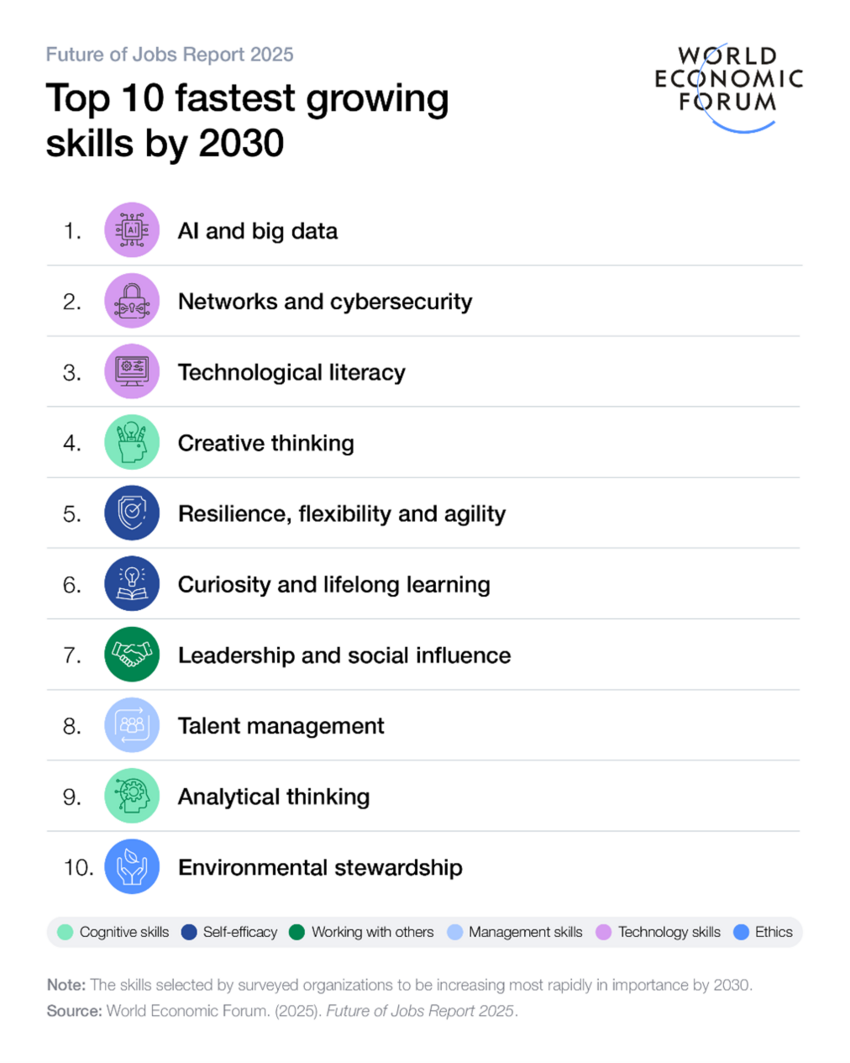
The World Economic Forum shows technology skills will be the skills most in demand by 2030.
Microsoft’s Work Trend Index shows AI users are cognizant of maintaining their skills, even when using AI for work:
- 86% say they use AI as a starting point and maintain responsibility for thinking
- 50% say ensuring quality of AI output is an essential skill
- 46% say using critical thinking to objectively analyze information and make reasonable judgements is more important as work is increasingly done with AI
It’s not necessary to become a developer, but you may need to get comfortable using AI tools to adapt to the changing work landscape.
Get Ready for What Comes Next
AI is changing how work gets done, but its impact is still developing and is often focused on tasks rather than entire jobs. The best response isn’t panic or avoidance, but preparation. Learning AI basics, building transferable skills, and staying informed will help workers better adapt to the changing workplace.
About Express Employment Professionals
At Express Employment Professionals, we’re in the business of people. From job seekers to client companies, Express helps people thrive and businesses grow. Our international network of franchises offers localized staffing solutions to the communities they serve across the U.S., Canada, South Africa, Australia, and New Zealand, employing more than 11 million since its inception. Learn more at ExpressPros.com or ExpressPros.ca.